 |
 |

|
||||||||||||||
 Plant Kingdom - Slideshow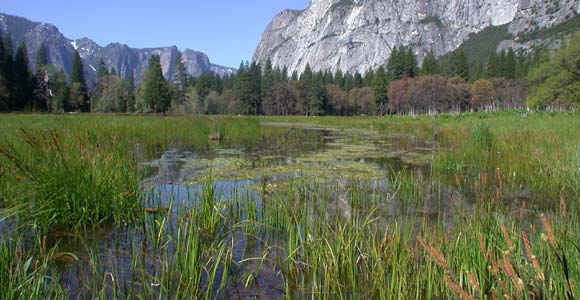
Let's take a few minutes to look at plants of the world. What do plants have in common? They have cell walls made of cellulose and chlorophyll in their cells. That chlorophyll is the key compound involved in photosynthesis. Beyond those facts, plants come in a variety of sizes from tiny mosses to redwood trees that are over one hundred feet tall. The giant sequoias are the largest living organisms on Earth while one species of angiosperm (flowering plant) can fit into the eye of a needle. The greatest variation among plants is found in the way they reproduce. Flowers come in thousands of varieties and even simpler gymnosperms have thousands of cone types. The most important contribution of plants is their ability to convert carbon dioxide into oxygen through photosynthesis. Not only do animals need the oxygen they produce, but plants also use the oxygen when they perform cellular respiration. With the exception of a few areas of the planet, you will find plants everywhere. They were colonizing the planet long before the first animals. Through the process of natural selection, plant species adapted to every climate type. They are now able to thrive in areas from under the surface of the ocean to the tops of mountains. Image Credit: Andrew Rader Studios |

|
|||||||||||||||
|
RETURN TO TOP or Search for more information... * The custom search only looks at Rader's sites. |
|||||||||||||||
 Go for site help or a list of life science topics at the site map!
©copyright 1997-2014 Andrew Rader Studios, All rights reserved. Current Page: Biology4Kids.com | Activities and Slideshows | Plants |
||||||||||||||||
|
** Andrew Rader Studios does not monitor or review the content available at external web sites. They are paid advertisements and neither partners nor recommended web sites. Specific links for books on Amazon.com are only suggested starting points for further research. Please browse, research options, and choose the appropriate materials for your needs. |
||||||||||||||||