


Vascular Systems of Plants
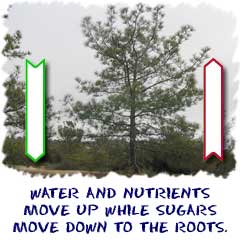 Xylem and phloem make up the big transportation system of vascular plants. As you get bigger, it is more difficult to transport nutrients, water, and sugars around your body. You have a circulatory system if you want to keep growing. As plants evolved to be larger, they also developed their own kind of circulatory systems. The main parts you will hear a lot about are called xylem and phloem.
It all starts with a top and a bottom. Logically, it makes sense. Trees and other vascular plants have a top and a bottom. The top has a trunk, branches, leaves, or needles. The bottom is a system of roots. Each needs the other to survive. The roots hold the plant steady and grab moisture and nutrients from the soil. The top is in the light, conducting photosynthesis and helping the plant reproduce. You have to connect the two parts. That's where xylem and phloem come in.
Zippy Xylem
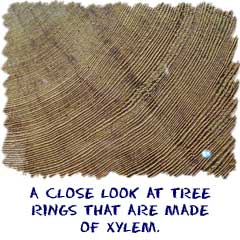 The xylem of a plant is the system of tubes and transport cells that circulates water and dissolved minerals. As a plant, you have roots to help you absorb water. If your leaves need water and they are 100 feet above the ground, it is time to put the xylem into action! Xylem is made of vessels that are connected end to end for the maximum speed to move water around. They also have a secondary function of support. When someone cuts an old tree down, they reveal a set of rings. Those rings are the remains of old xylem tissue, one ring for every year the tree was alive.
Phloem Fun
The fun never stops in the plant's circulatory system. Most plants have green leaves, where the photosynthesis happens. When those sugars are made, they need to be given to every cell in the plant for energy. Enter phloem. The phloem cells are laid out end-to-end throughout the entire plant, transporting the sugars and other molecules created by the plant. Phloem is always alive. Xylem tissue dies after one year and then develops anew (rings in the tree trunk). What is the best way to think about phloem? Think about sap coming out of a tree. That dripping sap usually comes from the phloem.Related Video...
Science Nation: Tree Rings (US-NSF Video)
Encyclopedia.com (Vascular Tissue):
http://www.encyclopedia.com/topic/vascular_tissue.aspx
Wikipedia (Xylem):
http://en.wikipedia.org/wiki/Xylem
Wikipedia (Phloem):
http://en.wikipedia.org/wiki/Phloem
Encyclopædia Britannica (Xylem):
http://www.britannica.com/EBchecked/topic/650951/xylem
Encyclopædia Britannica (Phloem):
http://www.britannica.com/EBchecked/topic/456947/phloem
- Overview
- Photosynthesis
- Basic Structure
- Xylem-Phloem
- Reproduction
- Special Struct.
- Mosses & Liverworts
- Ferns & Horsetails
- Gymnosperms
- Angiosperms
- Humans and Plants
- More Topics


 See the full list of biology topics at the site map!
©copyright 1997-2018 Andrew Rader Studios, All rights reserved.
Current Page: Biology4Kids.com | Plants | Xylem and Phloem
** Andrew Rader Studios does not monitor or review the content available at external web sites. They are paid advertisements and neither partners nor recommended web sites. Also, we do not collect or ask for personally identifiable information on any of our sites. Privacy Policy/Terms & Conditions